Netflix Pulled a Documentary About Root Canals. The Panic Was Aimed at the Wrong Target.
On the first day of 2019, Netflix started streaming a film called Root Cause. Within six weeks it was gone.
The film, made by the Australian director Frazer Bailey, told viewers that the root canal in their mouth might be a rotting time bomb. That it could be poisoning them. That it might be feeding cancer. People watched it and called their dentists to ask about having healthy teeth pulled. Endodontists watched it with their heads in their hands.
On 29 January 2019 the American Dental Association, the American Association of Endodontists, and the American Association of Dental Research sent a joint letter to Netflix saying that continuing to host the film could harm the viewing public. They sent the same letter to Apple, Amazon, and Vimeo. Netflix took it down.
So that is settled. Root canals do not cause cancer. The theory the film was built on came from the 1920s and was abandoned by the dental profession in the 1950s, after better studies failed to support it.
Here is the part nobody wants to talk about.
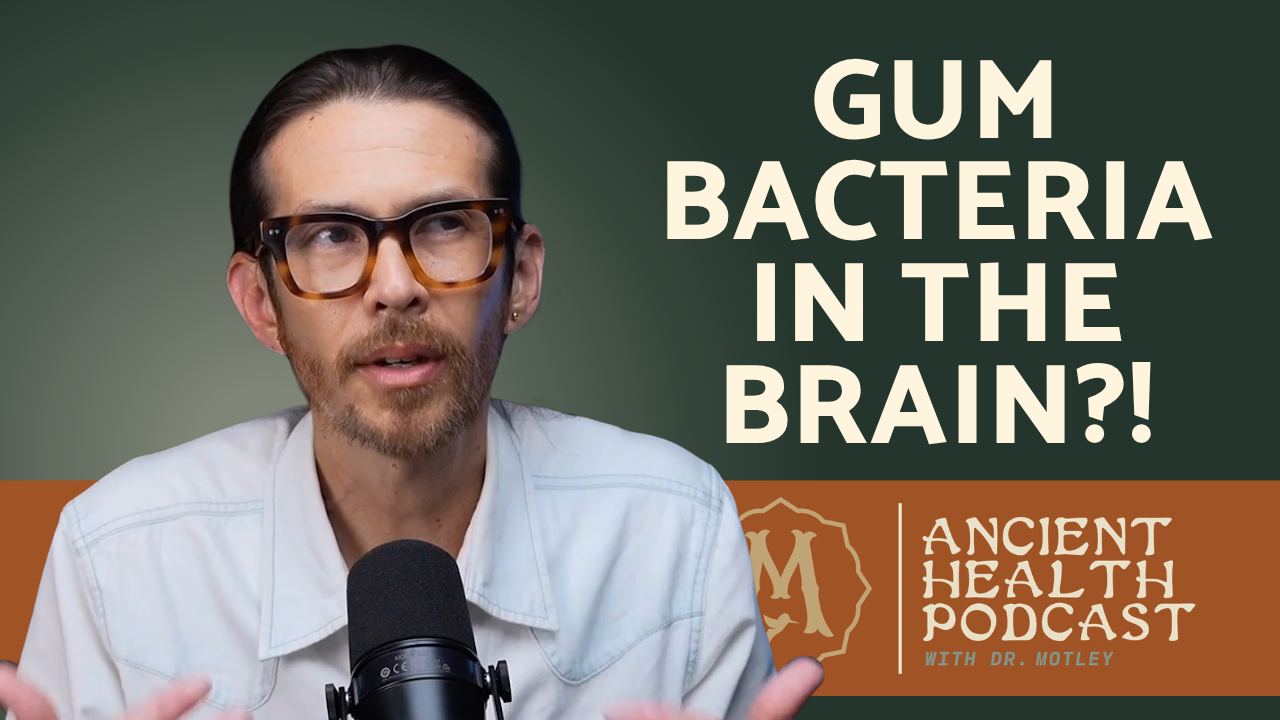
The film was wrong about the mechanism and right about the neighborhood. Your mouth is not a sealed compartment. It is wired into the rest of your body far more directly than most dentistry acknowledges. In 2019, the same year Root Cause came and went, a study in Science Advances reported finding Porphyromonas gingivalis, the bacterium behind chronic gum disease, in the brains of people who died with Alzheimer’s disease. Not near the brain. In it. The researchers also found the bacterium’s toxic proteases at levels that tracked with the tau pathology of the disease.
The panic was real. It was just aimed at the wrong target.
What a root canal actually does
Most people who have strong opinions about root canals could not describe one. Worth fixing that first.
A molar usually has two roots that run down into the gum, sometimes three. Down each root runs an artery, a vein, and a nerve, feeding the living tissue inside the tooth. When infection gets into that canal, it can destroy the nerve and cut off the blood supply. The tooth dies. That is why dead teeth turn gray.
The procedure opens the tooth from the top, drills down into the canal, and removes the nerves and the dead tissue. Throughout, the dentist is flushing the space with disinfectant solution, hollowing it out, trying to get it clean. Then the canal is filled with a material that hardens, and the tooth is capped or filled on top.
The case for it is straightforward. The infection is contained rather than spreading. You keep your tooth instead of losing it and dealing with a gap, an implant, or a bridge. Fevers come down. Joint pain often settles. And the pain in the tooth stops immediately, because the nerve is gone.
That last detail is the one the critics fasten onto.
The case against, made honestly
The argument in Root Cause, and among the dentists who agree with parts of it, is about what the drill cannot reach.
The main canals are not the whole story. Branching off them are microscopic tubules, and the figure that gets cited is roughly a mile of them inside a single tooth. Think of a stream branching into smaller streams, or a tree root splitting into finer and finer roots. Those branches held nerve tissue and blood vessels too, and when the tooth died, that tissue died with it.
The dentist fills and seals the main canal. The branches keep whatever is inside them.
Critics argue three things follow. First, bacteria find dead tissue. That is what they do. Given time and a food source, they will work their way into those branches. Second, once the tooth is capped, immune cells cannot get down there to fight anything. The seal that keeps bacteria out also keeps your defenses out. Third, those same tubules are pathways for serous fluid, the fluid that moves up through teeth. If you have ever tasted metal in your mouth for no reason, that is the pathway some practitioners point to. If it runs one direction, it can run the other.
Mainstream dentistry says the residual tissue is inert and this is not a problem. I am not an expert on tooth physiology and I am not going to pretend otherwise. What I will say is that if you are going to have a permanent structure sealed inside your jaw, you should understand the argument on both sides before you consent.
What the heart research actually shows
You will see a number circulating that heart attack patients are five times more likely to have had a root canal. I have not been able to find a study that supports it, and I want to be straight with you about that rather than repeat it because it is dramatic.
Here is what the research does show. A Swedish study called PAROKRANK looked at 805 people who had suffered a first heart attack, each matched against a healthy control. Looking at endodontic conditions one at a time, none of them reached statistical significance. When the researchers combined them into a weighted composite, the odds of a first heart attack roughly doubled. Gum disease on its own showed a similar association.
And the newest evidence points the other way on treatment. Research highlighted by the American Association of Endodontists in late 2025 associates having a root canal with lower cardiovascular and diabetes risk. The logic is not complicated: if you have an infection producing chronic inflammation, treating it removes the inflammation.
The honest reading is this. Oral inflammation and heart disease travel together. Nobody has proven the direction of the arrow. And the procedure that treats the infection is probably helping, not hurting.
Four questions before you say yes
If you are sitting in the chair and a root canal has been proposed, these are the questions my dentist friends, on both sides of this argument, say you should ask.
Is the nerve still alive?
There is a difference between a tooth with an irritated but living nerve and a tooth that has already died. The answer changes what your options are.
What happens if this root canal fails?
Ask before, not after. A retreatment, an apicoectomy, and an extraction are very different roads.
What is the long-term plan if something needs replacing?
Crowns fail. Seals fail. Ask what year two, year ten, and year twenty look like.
Can I Get a Cone Beam Scan?
This is the most people do not know to ask for. A conventional flat X-ray is a two-dimensional image of a three-dimensional problem. A cone beam CT gives a 3D view, and it can show infection underneath the apex of a root that a flat film simply will not resolve. If there is already infection down there, you and your dentist both want to know that before anything else happens.
Are some root canals necessary? Almost certainly yes. The point is not to refuse one. The point is to walk in informed.
If you already have one, this is not a reason to panic
I want to be direct here, because this is where the documentary did real damage.
I have many patients with root canals in their mouths and their bodies are fine with it. When I test them, the meridians associated with those teeth read normal. Their organs are balanced. Their bloodwork is clean. In those cases my advice is simple: if it is not broken, do not fix it.
The same reasoning applies to amalgam fillings,and this may surprise you coming from someone in natural health. When you drill out a metal filling, the mercury vaporizes. Even with a dental dam inplace, you are producing a concentrated burst of vapor that can reach the gums, the bloodstream, and the brain. The argument, and the dental associations make it, is that the total exposure from that removal can exceed what you would get from slow off-gassing over the rest of your life.
Your body adapts. It reaches a homeostasis around what is in your mouth. Sometimes disrupting that equilibrium costs you more than living with it. If you are immunocompromised, or the filling is failing, that is a different conversation. Have it with your dentist, not with the internet.
The map almost nobody talks about
Here is what I have been waiting to get to.
Chinese medicine never separated the mouth from the body. Long before anyone had a microscope, practitioners drew a chart connecting each tooth to a specific organ and its meridian, the channel of energy that runs past or through that organ. It is called the meridian tooth chart, and it works in both directions. A struggling organ can show up as a problem in its tooth. A chronically infected tooth can weaken its organ.
A few of the connections:
Your front four teeth, top and bottom, run to bladder and kidney. So if you have persistent trouble with your front teeth, ask yourself the other set of questions. Nighttime urination. Recurring UTIs. Dark circles under the eyes. Chronic knee problems. Those are all kidney-pattern symptoms in this framework.
The second molar in from the wisdom tooth runs to stomach, spleen, and pancreas. Cavities that keep appearing there, alongside reflux, indigestion, or a history of ulcers, is a pattern worth noticing.
I will use my own mouth as the example, because I would rather be the case study than use a patient’s.
I cracked a tooth on the inside. I brush, I oil pull, I do everything you are supposed to do. That tooth is a stomach tooth. I had stomach surgery in 2017 and have had a weakened stomach ever since. Separately, I have some demineralization on the back side of my front teeth, and a dental thermogram showed those four teeth running inflamed. Those are bladder teeth. I had bladder and UTI problems constantly as a kid.
So I started working on my bladder. Herbs to clean and support the organ,not the tooth. I have watched patients do the same thing and seen sore teeth stop hurting, recession stop advancing, and bleeding fade, after we cleaned out the organ associated with that tooth.
The critical caveat
This is not a diagnosis and I need you to hear that clearly. A cavity in your liver tooth does not mean you have liver disease. A bleeding gum above your kidney tooth does not mean your kidneys are failing. That is not what the chart is for. Use it as an investigative tool. Use it as a roadmap.
If one specific tooth in your mouth keeps failing while everything around it is fine, the chart tells you where to look next. Then you go get actual testing on that organ. Sometimes routine bloodwork comes back normal and you need something more specific. Sometimes you already know, in the way people do know, that you have always had a weak spot there. The point is to investigate, not to be afraid.
The case that made me a believer
A patient came to me with rashes on her upper chest,right under the collarbones, that would not resolve. She had been a missionary and had picked up parasites overseas, confirmed and treated. I found high levels of strep and some staph, which we addressed. That was a win.
But every time I tested her, the meridians running up near her esophagus, particularly the kidney meridian, came back weak. And she had this symptom I could not explain: her esophagus would tighten. She could not get food all the way down. It would stick in the middle of her chest.
Eight months. I kept getting frustrated. Why does this keep flaring? She went to see a mold specialist and the testing came back with high mold toxicity and H. pylori living in the biofilm that mold produces. Progress, but not the answer.
Then a doctor told her something nobody had said: get a cone beam scan, because I think you have a tooth feeding infection down into your throat. Which, when you say it out loud, is not a wild idea. The mouth connects to the throat. They scoped her esophagus and found outpouchings, small pockets growing off the wall where food was getting trapped. That was the stuck feeling.
Then a biological dentist did the cone beam scan and found two teeth with significant infection underneath the root apex.
Not root canals. Justi nfected tooth that nobody had seen because nobody had taken a 3D picture. They cleaned them out. She kept both teeth. Almost all of the esophageal tightening went away. Her bloodwork normalized. Her histamine came down. The brain fog lifted. The mold started clearing. And the two teeth, according to the meridian tooth chart, were the stomach tooth and the kidney tooth.
Those meridians run right up the front of the body, past the sternum, alongside the esophagus. The tissue was not getting the energy it needed to do the work of swallowing. We cleaned out the source, and the meridians came back online when I retested. I tell that story not because it proves the chart. One case proves nothing. I tell it because for eight months I was treating downstream of the actual problem, and the map is what would have pointed me upstream faster.
What to actually do
Start with bacteria, not with fear. Get your mouth tested if you have chronic unexplained symptoms. There are labs, MicroGenDX is the one I use, that sequence a saliva or swab sample against a database of tens of thousands of organisms.
If you have had a stubborn problem for years and nobody has looked in your mouth, that is a gap in your workup. Do the boring things. Floss between your teeth. There is real research associating regular flossing with lower stroke and atrial fibrillation risk, presented at the American Stroke Association’s conference in early 2025. It is a preliminary finding and an association, not a proven cause, but the downside of flossing is zero.
Oil pull. Coconut oil is my preference; sesame oil works. Use a remineralizing powder on your brush. Look into oral probiotics, which restore beneficial bacteria in the mouth the same way gut probiotics do lower down.
Use herbs to lower the load. Golden Thread Supreme, Melia Supreme, and Morinda are the ones I reach for. They help flush out bacteria, and they work on parasites and mold as well.
Support the organ, not just the tooth. If a specific tooth keeps giving you trouble, find the organ on the chart and work on the organ. Whether you do that with herbs, with a functional medicine practitioner, or with conventional treatment matters less than the fact that you are treating what is actually weak.
And find a dentist who believes the mouth is connected to the body. Not a dentist who will pull healthy teeth to chase a theory from 1923. A dentist who will take a 3D scan,who will talk to you about the bacterial picture, and who does not treat your mouth as a separate country from the rest of you.
The thing worth taking away
Weston Price,whose theory started all of this, was not a crank shouting from the sidelines. He directed the research institute of the National Dental Association, which became the American Dental Association. The profession believed him. That is why so many teeth came out between 1923 and 1925.
Then it studied the question properly and reversed itself. That is science working, and it is also a reminder that confident consensus can be wrong in either direction. The tooth-pull era was a mistake. So is telling people with perfectly good root canals that they are being poisoned. What survives both errors is the simple observation underneath: your mouth is the first entry point to your entire body, and everything in it eventually goes somewhere else. The bacteria in your gums end up in your arteries. Chinese medicine drew a map of that connection two thousand years before anyone could see a bacterium, and whatever you make of the mechanism, the instinct was right.
Do not live in panic. Do not pull healthy teeth. Get informed, get tested, ask better questions, and take your mouth seriously.
Listen to the full episode of the Ancient Health Podcast for the complete tooth-to-organ map, the four questions to ask your dentist, and the full patient case. Available on Apple Podcasts, Spotify, and YouTube.
Join the Mailing List!
Fill out the form below to receive the latest news and updates.