Mouth Taping for Sleep: Benefits, Risks, and What Your Nose Is Really Doing
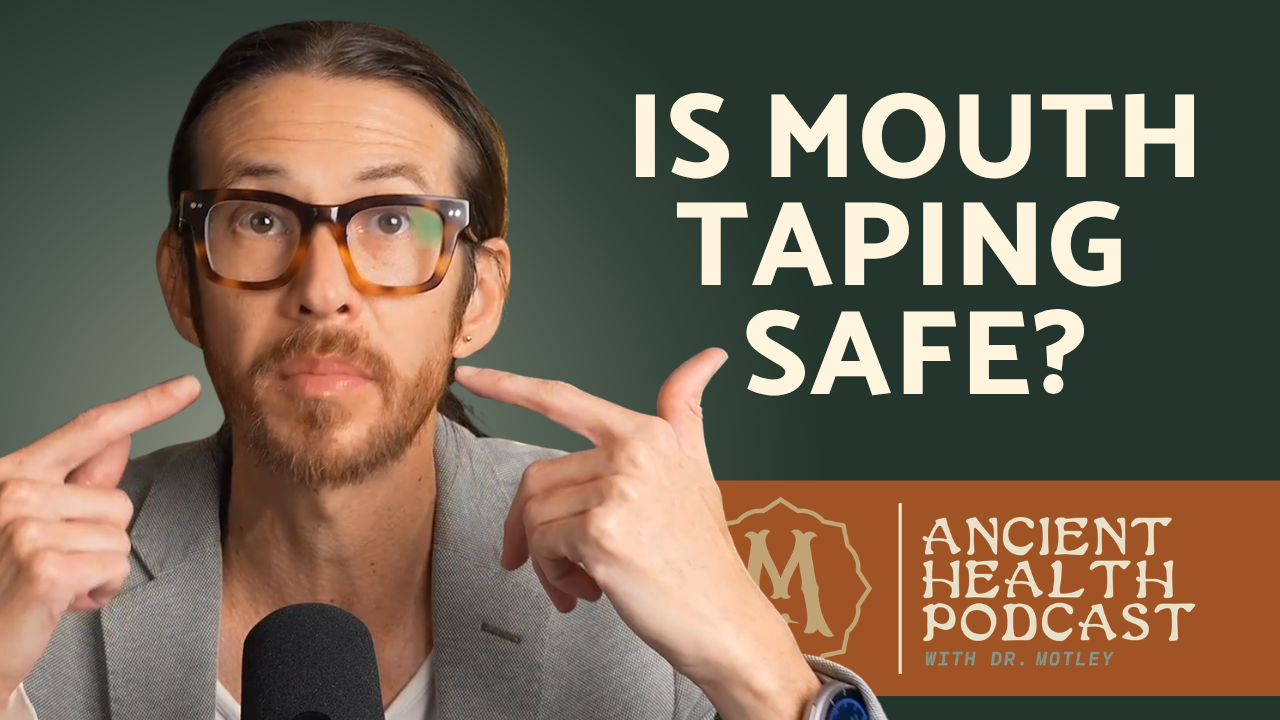
Walk through the wellness corner of the internet and you will find grown adults going to bed with a strip of tape across their lips. The idea is simple: seal the mouth, force yourself to breathe through your nose all night, and collect the rewards. Deeper sleep. More energy. Less snoring. Even, some claim, a sharper jawline.
Here is the part that gets lost in the trend. The goal behind mouth taping is right. The method can be wrong. And for the wrong person, taping your mouth shut at night is not just useless. It can be dangerous.
That is not a takedown of nasal breathing. Just the opposite. Breathing through your nose is one of the most underrated things you can do for your health. The problem is what taping assumes about why your mouth is open in the first place.
You do not breathe through your mouth for no reason
Start with the question almost no one asks. If nasal breathing is so good, why is your mouth falling open at night at all?
The mouth is a backup. It is an emergency airway that opens when the primary route, the nose, cannot move enough air. So when your mouth drifts open in your sleep, that is not a bad habit to be disciplined away with adhesive. It is your body solving a problem. Something upstream is blocking the nose, and the mouth is compensating so you keep breathing.
Tape the mouth without asking why it opened, and you may be closing the only exit your body had.
The list of things that block a nose is long: a deviated septum, chronically swollen sinuses, allergies, a sagging soft palate or uvula, congestion from old infections, even upper cervical misalignment or the position of your neck when you sleep. Sometimes one side is completely clogged while the other stays open. Any of these can push you into mouth breathing at night, and none of them are fixed by tape.
Your nose is a piece of biological engineering
To understand why the nose is worth protecting, look at what it actually does that the mouth cannot.
The nose produces nitric oxide, a gas with real antimicrobial punch. As you breathe in, that nitric oxide goes to work on bacteria, viruses, and mold particles caught in the nasal passage, helping neutralize them before they travel deeper. Your lungs make some nitric oxide, but far less. The nose is where the concentration is high.
That is only the start. The nose also filters particulates, warms cold air, and humidifies dry air before any of it reaches your lungs. Warm, moist, clean air is what your lungs are built to receive. Cold, dry, unfiltered air is not.
Breathe through your mouth and you skip every step. No nitric oxide. No filter. No humidifier. The mouth is, in plain terms, a straw. It moves air, and that is about it.
There is one more benefit that has nothing to do with germs. When you draw a slow breath in through the nose and down into the belly, you stretch the diaphragm and, with it, the vagus nerve. That is the nerve that carries you into the parasympathetic state, the rest-and-repair mode where the body calms and recovers. Slow nasal breathing is one of the most direct switches you have for turning stress down. Fast, shallow mouth breathing does the opposite.
What the research actually says about mouth taping
If nasal breathing is the goal, does taping the mouth get you there safely? A 2025 systematic review looked at exactly that question, and the answer is a careful "it depends."
The review, published in the journal PLOS One in May 2025, pooled 10 studies covering 233 patients with mouth breathing, sleep-disordered breathing, or obstructive sleep apnea. The findings were mixed. Two studies showed measurable improvement in sleep apnea markers such as the apnea-hypopnea index. Others showed no meaningful difference.
The more important finding was about safety. The reviewers flagged a real risk of harm for people with nasal obstruction, up to and including asphyxiation, because taping removes the backup airway from someone whose nose already cannot do the job. They also pointed out that many of the studies excluded people with nasal obstruction, which is a problem, because those are the very people most likely to try taping in the first place.
Translated out of research language: mouth taping may help some people, it does little for others, and for a specific group it can be actively risky. And there is a quieter danger underneath all of it. If tape stops your mouth from opening but you have undiagnosed sleep apnea, the tape can mask the condition. You feel like you are fixing something while a serious problem stays hidden.
The warning lights you should not tape over
This is where the trend gets personal for anyone who snores. Chronic snoring and gasping for air at night are not background noise. They are signals.
The pattern to take seriously: loud snoring, moments where breathing seems to stop and then restarts with a gasp, waking up exhausted no matter how long you were in bed, morning headaches. Carrying extra weight and drinking close to bedtime can add to it. Any cluster of these is worth a conversation with a doctor and, often, a sleep study.
The reason to check first, tape second, is straightforward. If you have sleep apnea, you want to know. Knowing gives you options: a CPAP device, oxygen support at night, structural work on the nose, or a plan built with your provider. Not knowing, and taping over the symptom, takes those options off the table. As the episode puts it, oxygen is not something to play around with.
None of this requires fear. A pulse oximeter from any pharmacy clips onto your finger and reads your oxygen level in seconds. Readings that sit below 95 are worth investigating. It is a cheap first look, not a diagnosis, but it tells you whether to dig deeper.
Stop treating the open mouth. Treat why it is open.
Here is the shift that changes everything. Stop treating the open mouth as the problem. Start treating the reason it opens.
If the nose is blocked, find out why. Common culprits include allergies, which swell the turbinates and sinuses and can even contribute to a deviated septum over time. Old head trauma or a concussion can shift the skull bones and distort the nasal passage. Childhood infections, chronic strep, staph in the nose, viral loads that never fully cleared, can leave the sinuses congested for years. In Traditional Chinese Medicine, even digestion plays a role, because the large intestine meridian ends at the side of the nose, linking gut problems to sinus congestion.
The point is not that every stuffy nose is a crisis. It is that the nose is worth investigating rather than bypassing. Clear what is blocking it, whether that means treating infections, addressing allergies, doing structural work, or in some cases seeing an ENT for something a swab will not catch, and the airway opens on its own.
Then comes the part you can start today, for free. Retrain nasal breathing while you are awake. Breathe low and slow through the nose. Push the belly out on the inhale so the breath drops into the diaphragm rather than staying high in the chest. Do it at your desk. Do it on a walk, which is one of the best settings for it. A few minutes several times a day is enough to begin retraining the palate and the vagus nerve. Your daytime practice becomes the training ground for how you breathe at night.
The ancient view: nose for breathing, mouth for eating
Traditional Chinese Medicine landed on this division of labor thousands of years ago. The nose is for breathing. The mouth is for eating. Two jobs, two doorways.
In that framework, the lungs govern your chi, the body's overall energy, and the lungs open into the nose. The nose is the clearest pathway to the lungs, and it is tied to the wei qi, the defensive energy that guards you against illness. Notice how neatly that maps onto the modern picture. The nose makes nitric oxide, which helps defend against microbes. The nose guards the gate. Ancient language, same organ, same job.
The healthier the nose and sinuses, the better the energy the lungs can produce. Which is why the answer to a mouth that falls open at night is not to seal it. It is to restore the nose to the point where the mouth closes on its own, because the body is finally getting the air it needs through the door built for it.
The bottom line
Mouth taping can work for some people. For others it is taping over a symptom, and occasionally taping over a serious one.
So before you reach for the tape, ask the better question. Why is your mouth open at night? If you snore or gasp or wake up drained, get checked for sleep apnea first. Find and clear whatever is blocking your nose. Then retrain nasal breathing while you are awake, slow, quiet, down into the belly.
And in the meantime, fall in love with your nose. It makes a gas that helps kill infections. It filters the mold and dust out of your air. It warms and humidifies every breath. It is not a hack. It is how you are built.
Want the full walkthrough, including the patient stories and the TCM map of the face? Listen to
the Ancient Health Podcast, Mouth Taping Could Be Closing Your Emergency Exit - What to Fix First According to Ancient wherever you get your podcasts, or watch on YouTube at @drmotley.
This article is for educational purposes only and is not medical advice. Always consult your health care provider before making changes to your health regimen.
Join the Mailing List!
Fill out the form below to receive the latest news and updates.